Celebrating 25 at DCA: From San Francisco to San Fransokyo
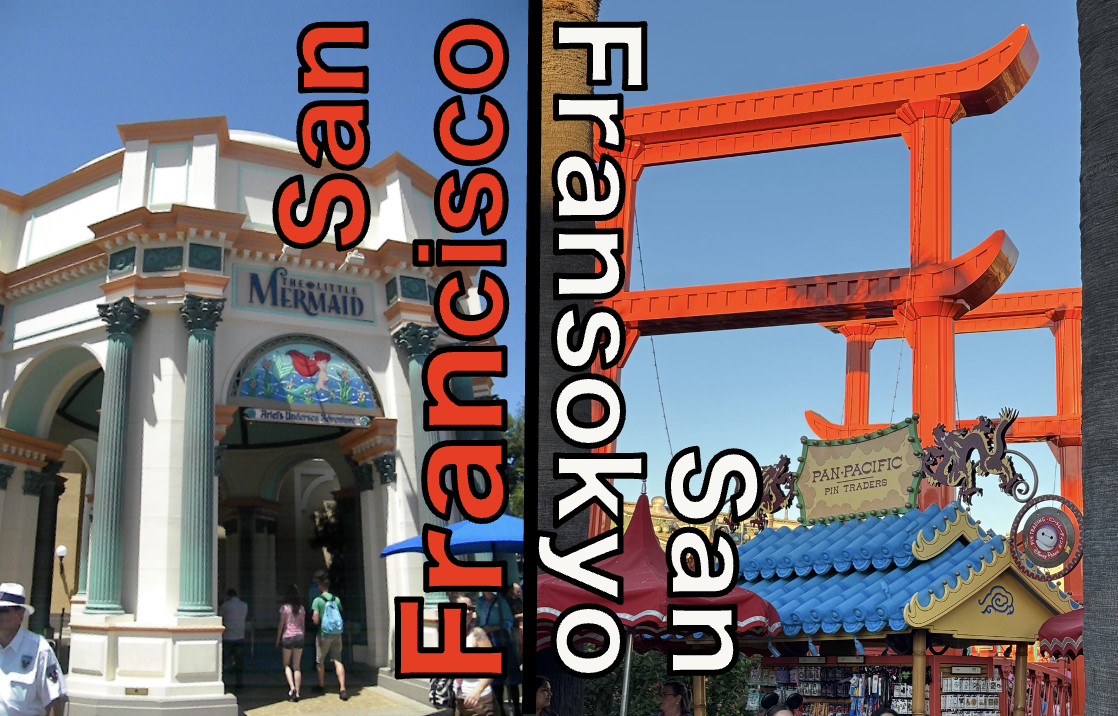
When people think of Disneyland’s neighbor, Disney California Adventure, they typically speak up about Radiator Springs or Grizzly Peak. They talk about Incredicoaster and Soarin’ and Guardian’s of the Galaxy Mission Breakout. So talking about San Francisco and San Fransokyo can lead some people to wonder, “where’s that?” Yet there are some real gems worth taking in. Oh, and did we mention World of Color. As nighttime entertainment, this one stands alone as a truly beautiful, incredibly amazing fountain spectacular. So join us as we celebrate the 25th anniversary of Disney California Adventure: From San Francisco to San Fransokyo.
This podcast is produced by myself and Performance Journeys, which offers training, development and consultant support to organizations big and small and entrepreneurs new and established. With a wide variety of resources and long-time in-the-trench experience, we offer workshops, online learning, coaching and more to organizations that want to build their teams, raise organizational excellence, improve leadership and create customer loyalty. Check us out at PerformanceJourneys.com.
As with our podcast, be sure to check out our web site, DisneyInsights.com where we offer key points, photos, videos, links and more. Note that YouTube carries now carries our podcasts. So please subscribe to our Disney Insights YouTube page as it will be more a part of our social media strategy moving forward. We appreciate any positive ratings, reviews or referrals you make to others.
San Fransokyo Overview
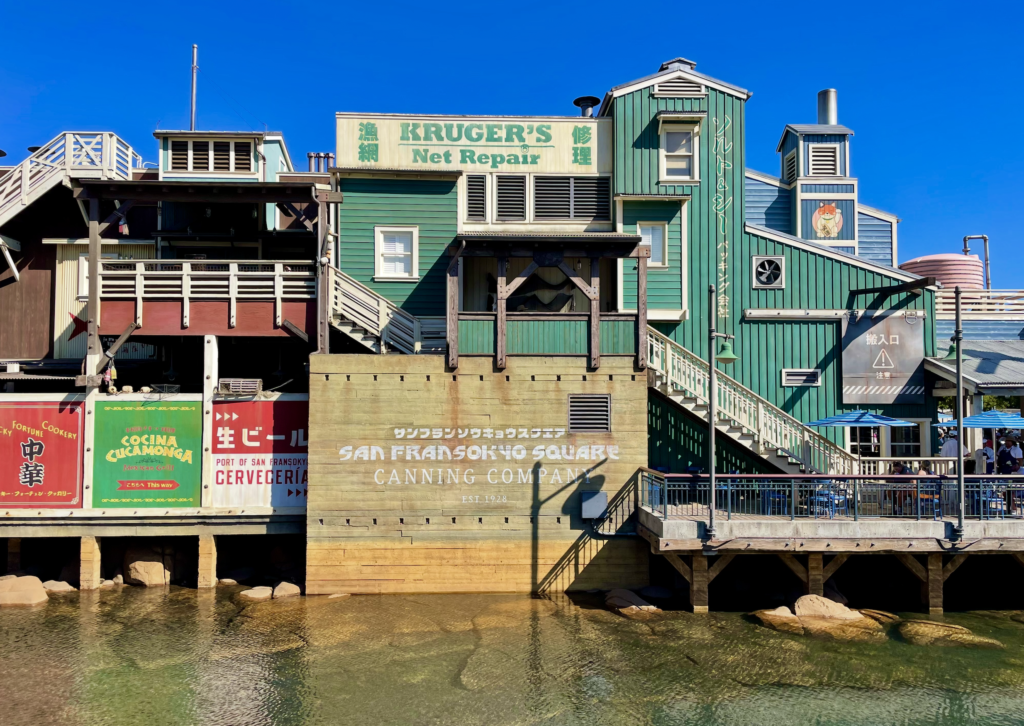
Where is San Francisco in Disney California Adventure and what is San Fransokyo? San Fransokyo was originally known as Pacific Wharf, it along with the San Francisco portions of what is now Paradise Gardens Park was also a part of the Golden State, which in the early days occupied nearly 2/3rds of the park when DCA first opened in 2001. When San Fransokyo originally opened as Pacific Wharf, this themed waterfront locale was once an homage to Monterey’s Cannery Row. It’s design took its cue from the same world written by John Steinbeck in his famed novel, Cannery Row. In fact, it was originally known as Ocean View avenue in Monterrey, but because of Steinbeck, it was named after the novel. In keeping with this small community along the California coast, Pacific Wharf incorporated the clapboard style buildings, the industrial stove pipes and the skybridge that connected various aspects of the sardine factory business. Recall, that the intention of these themed areas was to allow guests the chance to see parts of California without traversing the state. And so this area was very true to that Monterrey sensibility and feel.
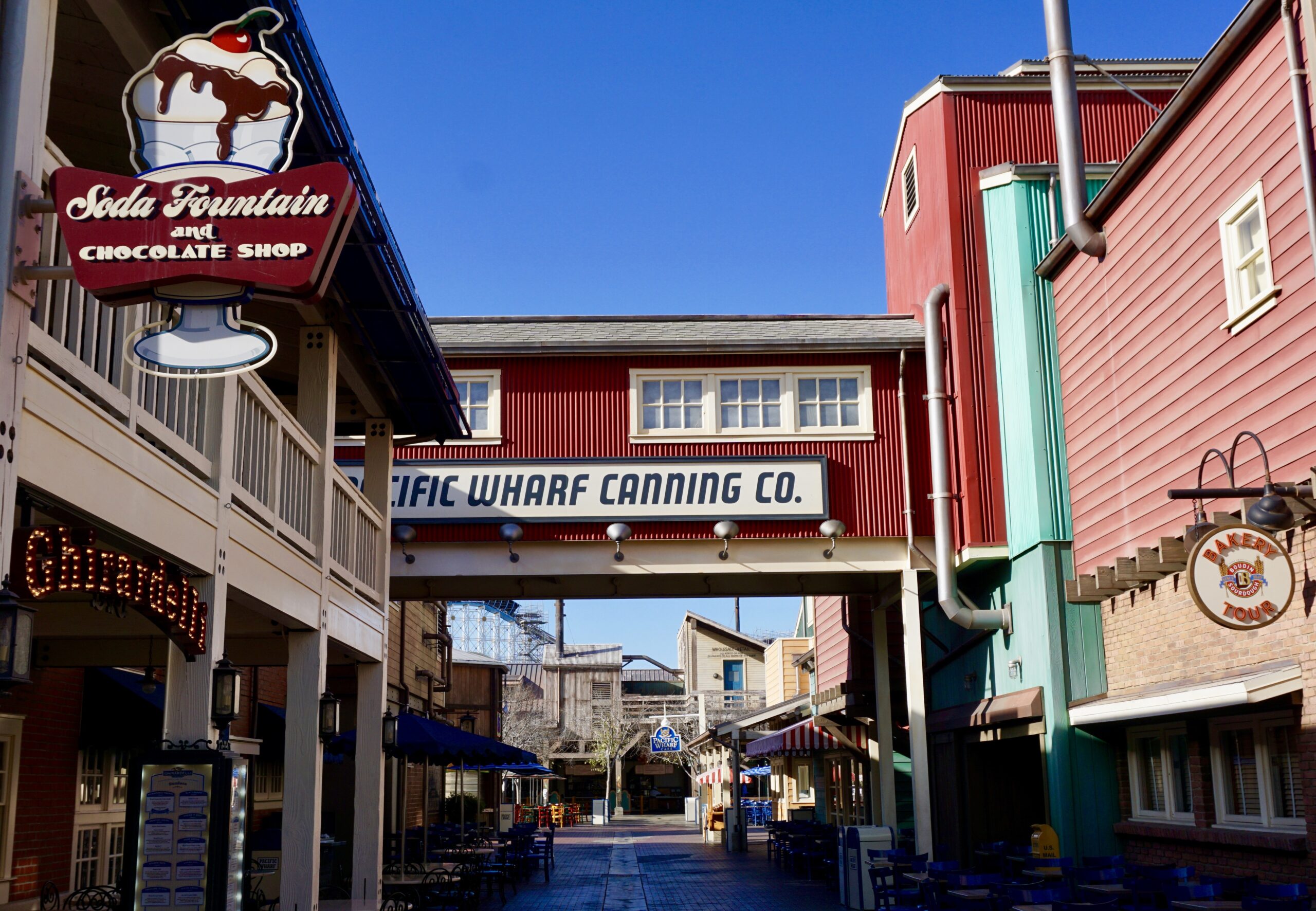
Its location made it perfect for hosting a very unique looking central eatery, perfect for guests as they were traveling from the front of the park in the morning to the back half in the afternoon. But this particular district was more than a well-themed food court. It held what was an original idea introduced by Michael Eisner during the “Disney Decade” that would allow guests to see different workplace industries at work. There were three key locales that played on this concept.
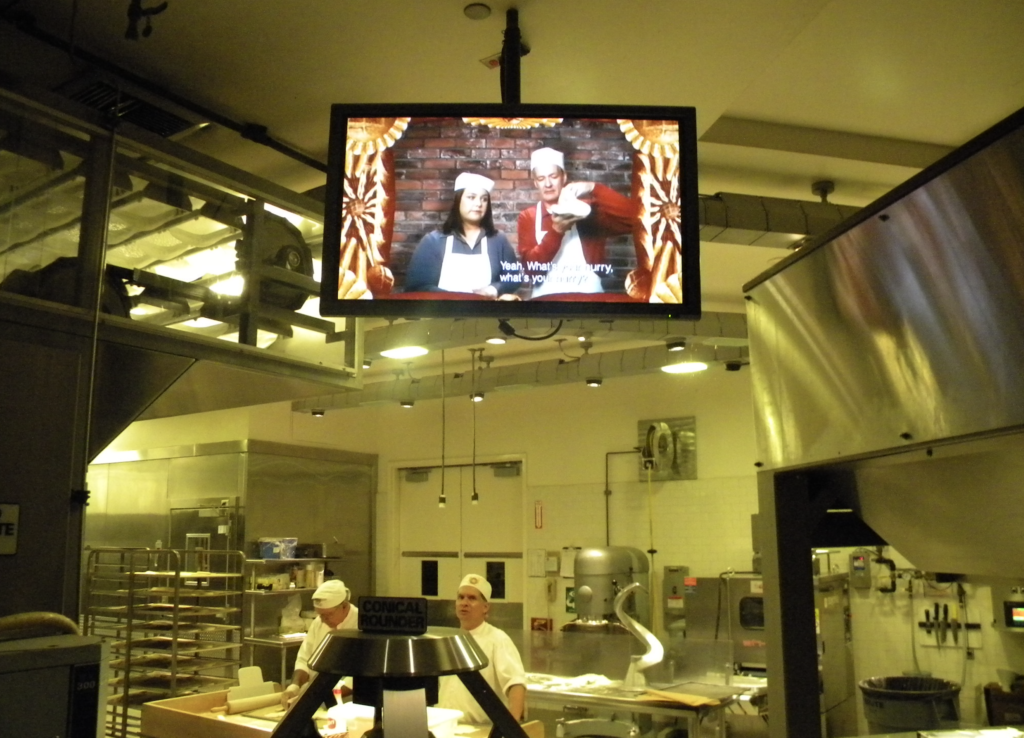
1. Boudin Bakery. Boudin Bakery is originally out of San Francisco and is considered the “longest continually operating business” in the Bay Area. French bakers came over during the height of the Gold Rush in 1848. Those pioneers created and kept a starter yeast-bacteria that is actually still used today. In fact Boudin preserved that same starter dough during the chaos of the great San Francisco famed earthquake and fire of 1906. If you want something authentic, it would be sourdough bread as we know it today. Boudin not only hosted the Pacific Wharf Cafe but offered tours of their factory. In fact you could get free bread samples to boot (which by the way is where miners sometimes stored their starter dough). During the tour Rosie O’Donnell and Colin Mochrie host your stay and describe the unique process. The tour and the free bread samples are still available, but now the Cafe is ran by Aunt Cass of Big Hero 6. But the big news is that when this restaurant opened, so did the introduction of bread bowl chowders, soups and chilis. It has been one of the favorites in both parks since Disney California Adventure opened in 2001. Sourdough bread bowls is a very Disneyland thing.
2. Mission Tortilla Factory. Across the way from Boudin tortillas were being made at the Mission Tortilla Factory, now known as Mission Foods. And up until 2011 you could get a sample tortilla at the end of your tour. The tortillas were also part of the offering at Cocina Cucamonga Mexican Grill. Californians love their Mexican food and when the opportunity arose, it switched locations with our third major locale, The Lucky Fortune Cookery.
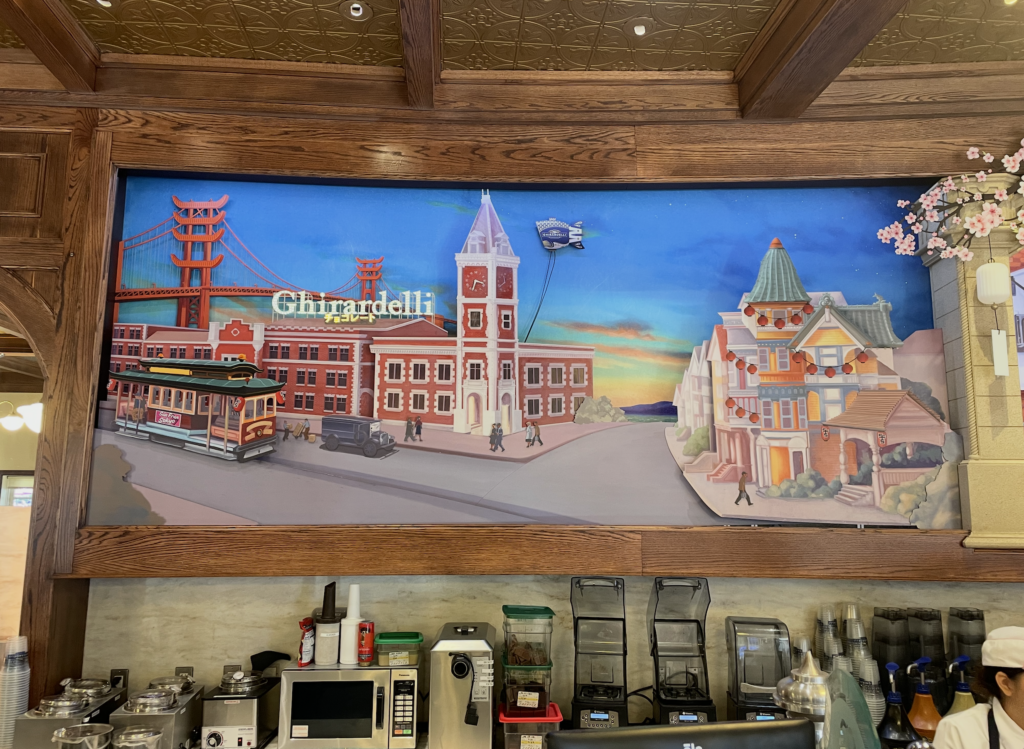
When the tortilla factory went away, in came Ghirardelli’s. This is truly a “San Francisco Treat” as the roots of this organization began here in this city by the bay. Domingo Ghirardelli immigrated to California–also during the Gold Rush (the Gold Rush is a repeated theme here). He would originate in 1865 something called the Broma Process, which was a technique of hanging a bag of chocolate in a warm room to let cocoa butter drip out, leaving behind a residue that could be pressed into ground chocolate. Apparently it’s the standard process in the industry, all I know is it’s phenomenally delicious. He established a factory location in 1893 that would be known as Ghirardelli Square. It survived the 1906 earthquake and is still a landmark in San Francisco today. Beyond anything and everything edible, my favorite part of the store is a wonderful animated mural that shows the highlights of the Bay Area as they have impacted Ghirardelli’s own experience. And then, let’s face it, there’s no better ice cream concoction in any Disney park. Crazy it isn’t in more parks. People talk about great coffee and Starbucks. But ice cream and Ghirardelli are equal–if not better according to my own palette.
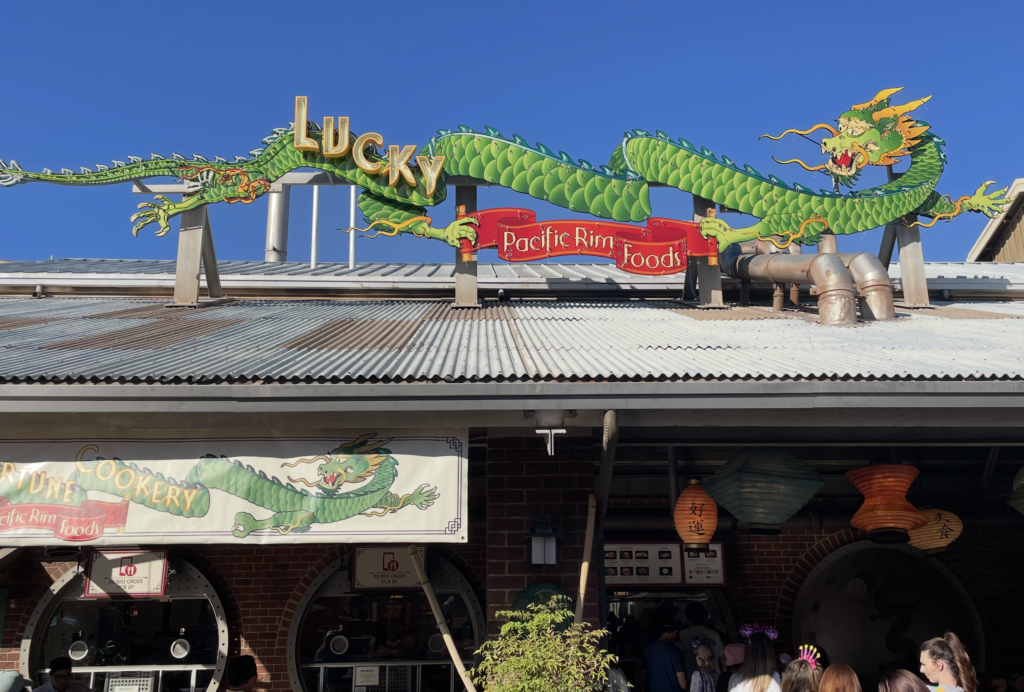
3. The Lucky Fortune Cookery. Let’s look at the third original property, one that’s still here today. In the same vein of “let’s see industry at work” The Lucky Fortune Cookery originally opened with a fortune cookie machine. Unfortunately, it was not so lucky. But the counter service facility is still is as popular as ever. I highly recommend the Baymax Macrons for desert.
Enter San Fransokyo
Baymax leads us to the 2022 redo of Pacific Wharf into San Fransokyo. San Fransokyo is based on Big Hero 6, a film created by Walt Disney Animation Studios, but is not a “Disney” property per se. It’s actually a Marvel comic property. The whole film takes place in a world called San Fransokyo which sounds like a mish mash of San Francisco and Tokyo. But California itself is a Mish Mash of people from all over the world, and strangely enough, while the theming was strong with Pacific Wharf, it’s stronger with San Fransokyo. Even the bridge leading from Paradise Pier is a better Golden Gate Style Bridge than the one that couched the monorail when it was designed for the front of the park in its opening years.
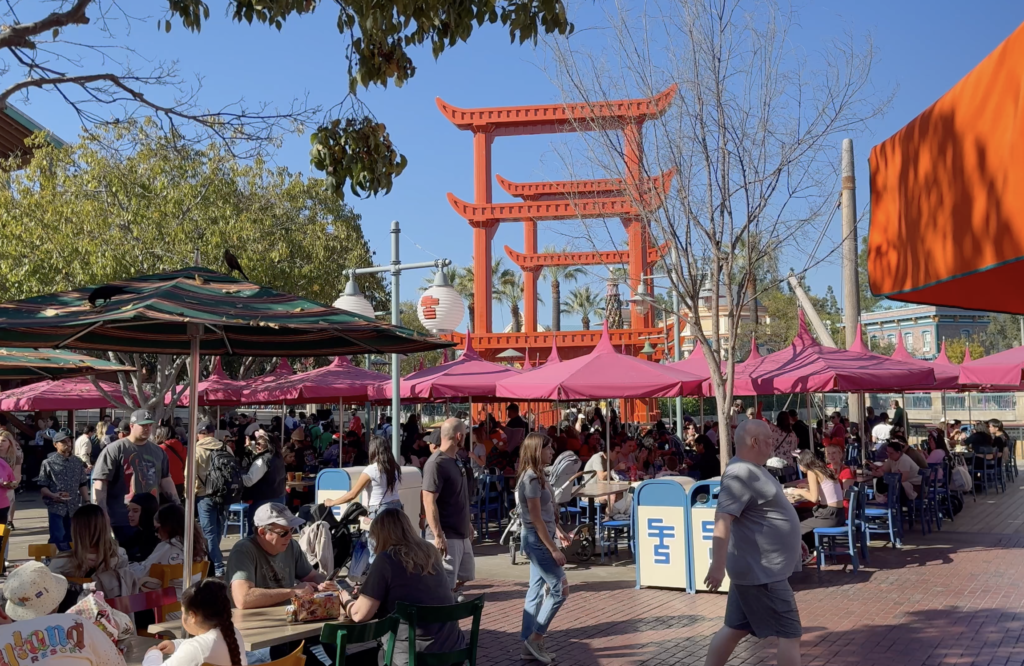
Look for the fish-shaped turbine above Rita’s Turbine Blenders. There you’ll find a cable that runs from the top of this hut dispensing blender-style drinks. That cable runs over to WyndSynch, which is the energy company providing electricity for the entire community.
Storywise, you are entering on “Big Hero 6 Day”, an opportunity for the locals to pay homage to the ones who have protected them in the city.
Bay Max is one of the best meet ‘n’ greet experiences. Definitely the highlight of this area. Check it out!
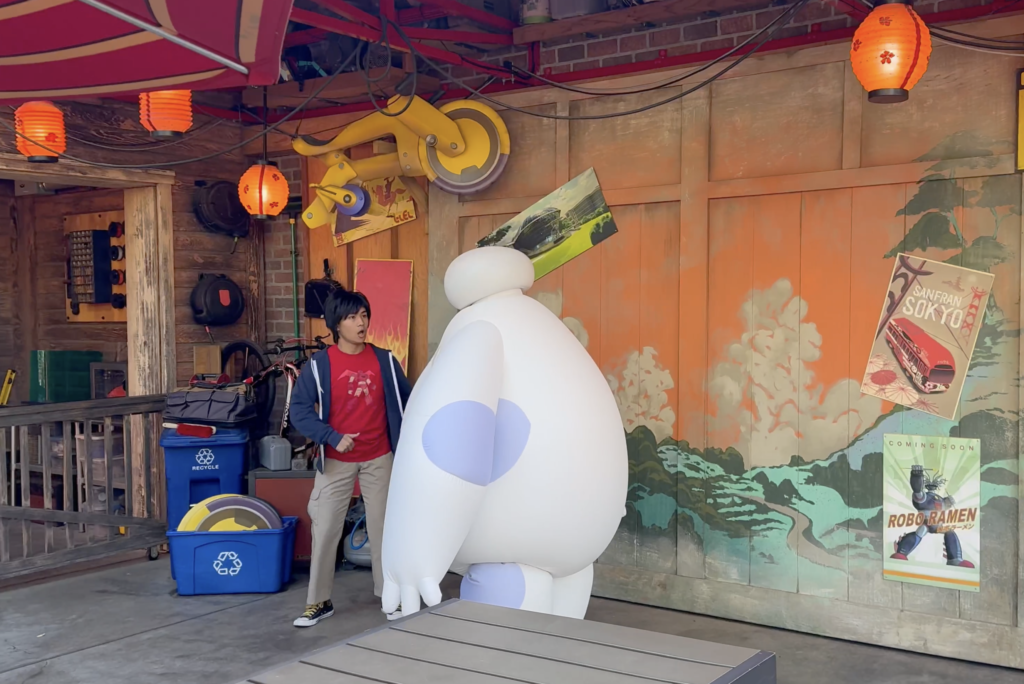
There’s a makeshift shop next door, but it’s one that’s filled with Big Hero 6 Easter eggs. And of course, there’s some great merchandise as well.
Paradise Gardens Park Overview
Across the water from San Fransokyo is San Francisco–or elements of it. They now are part of the Paradise Gardens Park, but were originally part of Golden State. And it still connects with Grizzly Peak with its Victorian townhouses. But it’s most recognizable piece of architecture is a 45 foot tall replica of the rotunda of San Francisco’s Palace of Fine Arts. The building attached held a long mural outlining California’s history. Inside you would see Golden Dreams, a 22-minute theater attraction located in a 350-seat art deco style theater. That film was a salute to California’s colorful history, but mostly to Whoopee Goldberg, who hosted the attraction by playing Califia. Califia is a pagan warrior queen who ruled over a kingdom of black women living on the Island of California. It’s a long and complicated story, but early Spanish explorers thought when they landed on Baja California, that it was an island and that it was ran by the mythical Califia. The story didn’t stick the landing, but the name certainly stuck to the land. And now it’s California today.
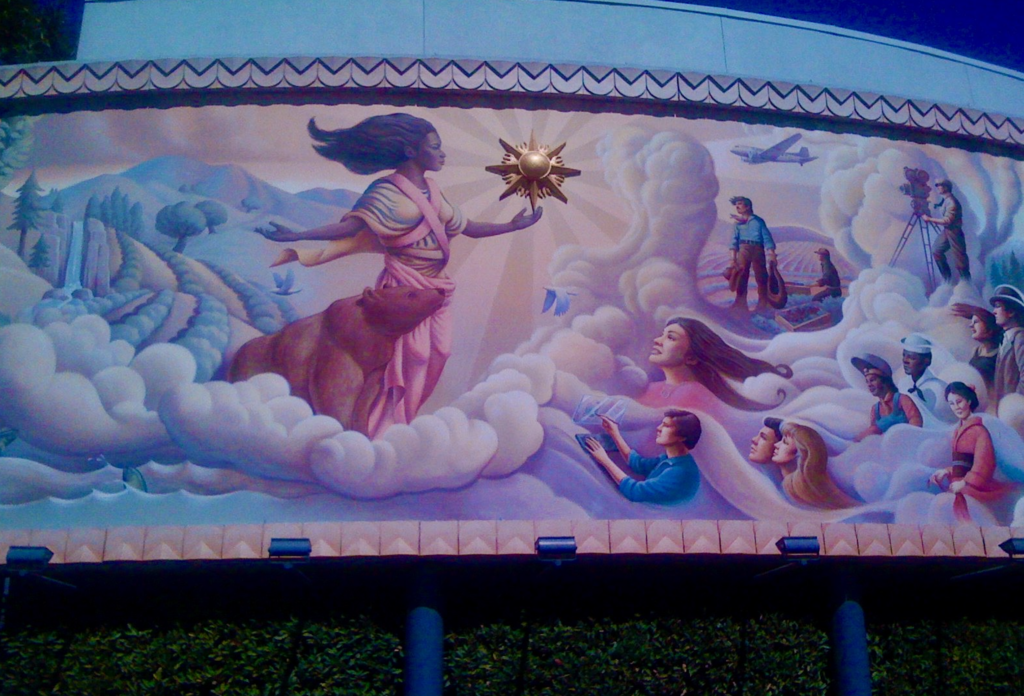
It was never as bold and impressive as The American Adventure at Epcot, but there were great things about the film which covered centuries and highlighted fascinating moments such as Chinese Laborers in building the railroad, water brought into LA by Mulholland, photographer Dorothea Lange’s work during the “Grapes of Wrath” depression era, and the advent of the computer with Jobs and Wozniak. Even better is the song, “Just One Dream” sung by Heather Headley, who originated the role of Nala in The Lion King on Broadway. This accompanies a beautiful montage of California today.
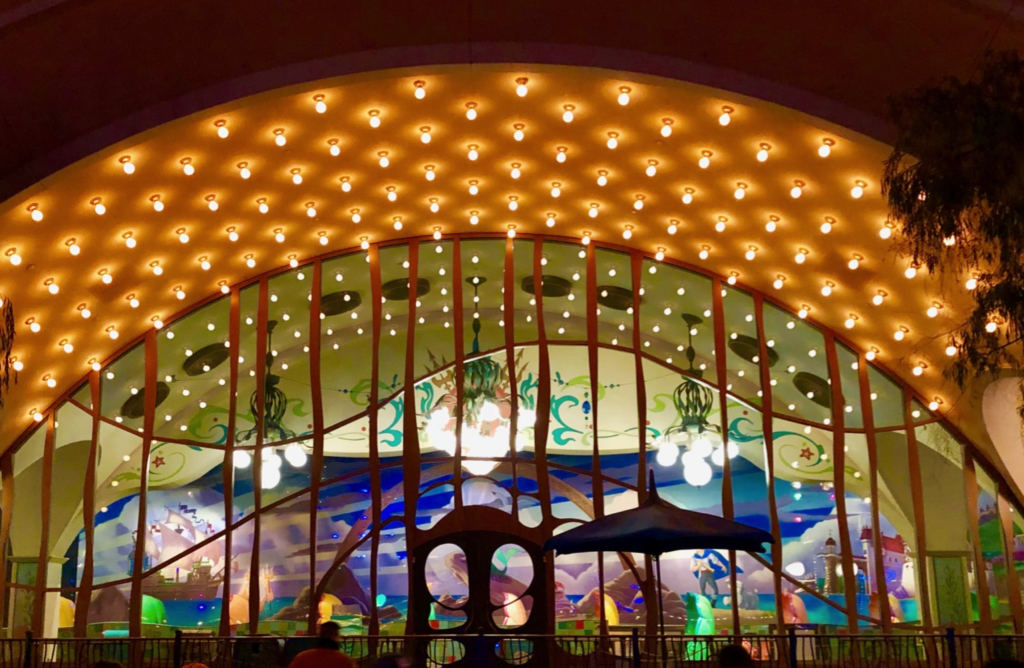
Or at least California at the start of the 21st Century. By 2009 plans were underway to demolish the building, while keeping the rotunda structure. In its place would be The Little Mermaid–Ariel’s Undersea Adventure. Nearly identical to its sister in the Magic Kingdom at Walt Disney World, this new attraction opened in 2011, a year earlier. The exterior is very different than its Florida counterpart with a look reminiscent of a sea side aquarium, complete with King Triton on top. It was the second attraction to open up with in what would be a long line of changes that took place from World of Color–the first attraction all the way past Cars Land through Buena Vista Street to the entrance of the park.
Paradise Bay is the centerpiece of not just this corner of “Frisco–it covers all of Paradise Gardens Park and is the foreground to Pixar Pier. But the spectacle that sits on these waters best belongs here in this conversation as guests gather by the thousands along the step-down promenade to see World of Color. This is a nighttime show really unlike any other. Conceived by Disney Entertainment executive, Steve Davison, who is responsible for dozens of amazing entertainment projects across the globe like Paint the Night Parade, Luminous Fireworks at Epcot, Remember…Dreams Come True Fireworks and It’s a Small World Holiday, both at Disneyland.
To understand this show by the numbers, consider this: There are 1200 fountains. They are all individually-controlled water jets, and each have their own LED light ring. Most are capable of shooting some 200 feet in the air. A few fountains support a massive, 3 part mist screen that canvases some 380 feet across the lagoon. For contrast there are several Isobar flame cannons that reach a height of 50 feet. Lights and projections all along the bay support are timed to support the show. There are even these places where hidden fountains located in the flower beds throughout suddenly come alive along with CO2 cannons and foam machines for certain shows.
And then there’s the music. The original show was performed by the London Symphony Orchestra and The Nashville Choir. It showcases musical moments from The Little Mermaid to the Pines of Rome in Fantasia 2000 to Pocahontas to Wall-E. There are moments from Aladdin, and A Bug’s Life, Beauty and the Beast. But my favorite part is that it begins with a musical introduction from Walt Disney’s Wonderful World of Color.
The base package of this show cost some 75 million to produce and took some 15 months to install. During the day, you really can see very little of it. But at night, and when they are maintaining the fountains, the platforms supporting all of this raise up. It’s the moment you start to realize how complicated it is to have that much electricity running through the water to make all of this happen. By the way, one of the most interesting jobs at Disneyland Resort is that of a scuba diver providing maintenance to these rigs.
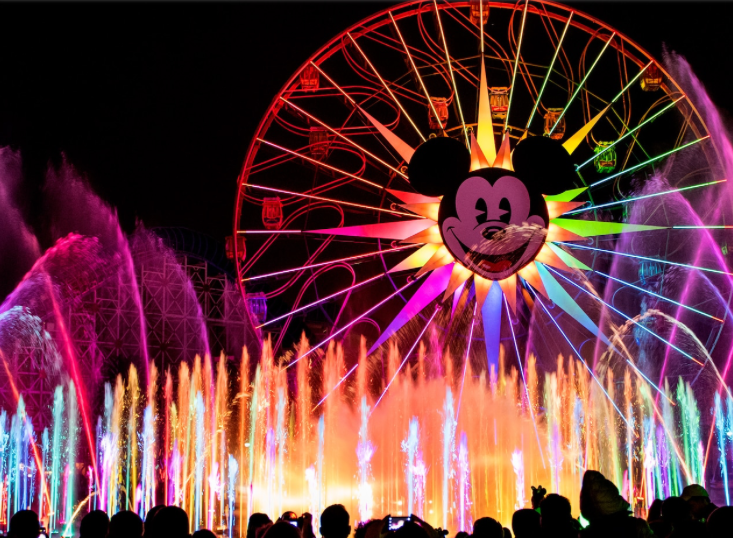
It premiered on June 11, 2010 and was really the beginning of what would be the changes made to Disney California Adventure. Bob Iger’s six word mandate for DCA’s transformation was “Big ambition. Big risk. Sweeping change.” For the show specifically, the mandate was “It can’t have any people…but it needed to combine water ,music, and lights in some fashion that would keep viewers in awe for nearly a half hour.” Oh…and no fireworks. And yet the show was to help create for the park a “vibrant nightlife”. Specifically Bob Iger told Steve Davison, “World of Color is the first thing out of the gate, and it has to show the world that California Adventure is going to be newly spectacular.’ No pressure.”
In the brainstorming session, the team really didn’t think anyone would agree to this. It was so expensive. But when they met with Bob Iger, the first words out of his mouth were, “When can we have this?”
From Leslie Iwerk’s Imagineering Story, we read of Davison’s first time turning on the fountains…
Bob Weiss, who headed up the transformation of Disney California Adventure shared his impression of what this show ultimately did to the park…
So yes, this corner of the park doesn’t have Radiator Springs or Soarin’, but it does have something very special that guests enjoy even today.
Note that his San Francisco corner of the park is part of Paradise Gardens Park. We’ll cover that along with Pixar Pier in the next few weeks…and as well, the new Coco ride that will connect both of them.
Disneyland Insights
1. Disneyland Insights: A Multimedia Kingdom of Hidden Magic & Behind-the-Scenes Tales
What Is It? An interactive, app-based deep dive into Disneyland’s 60+ year history, design, and storytelling. [1, 2]
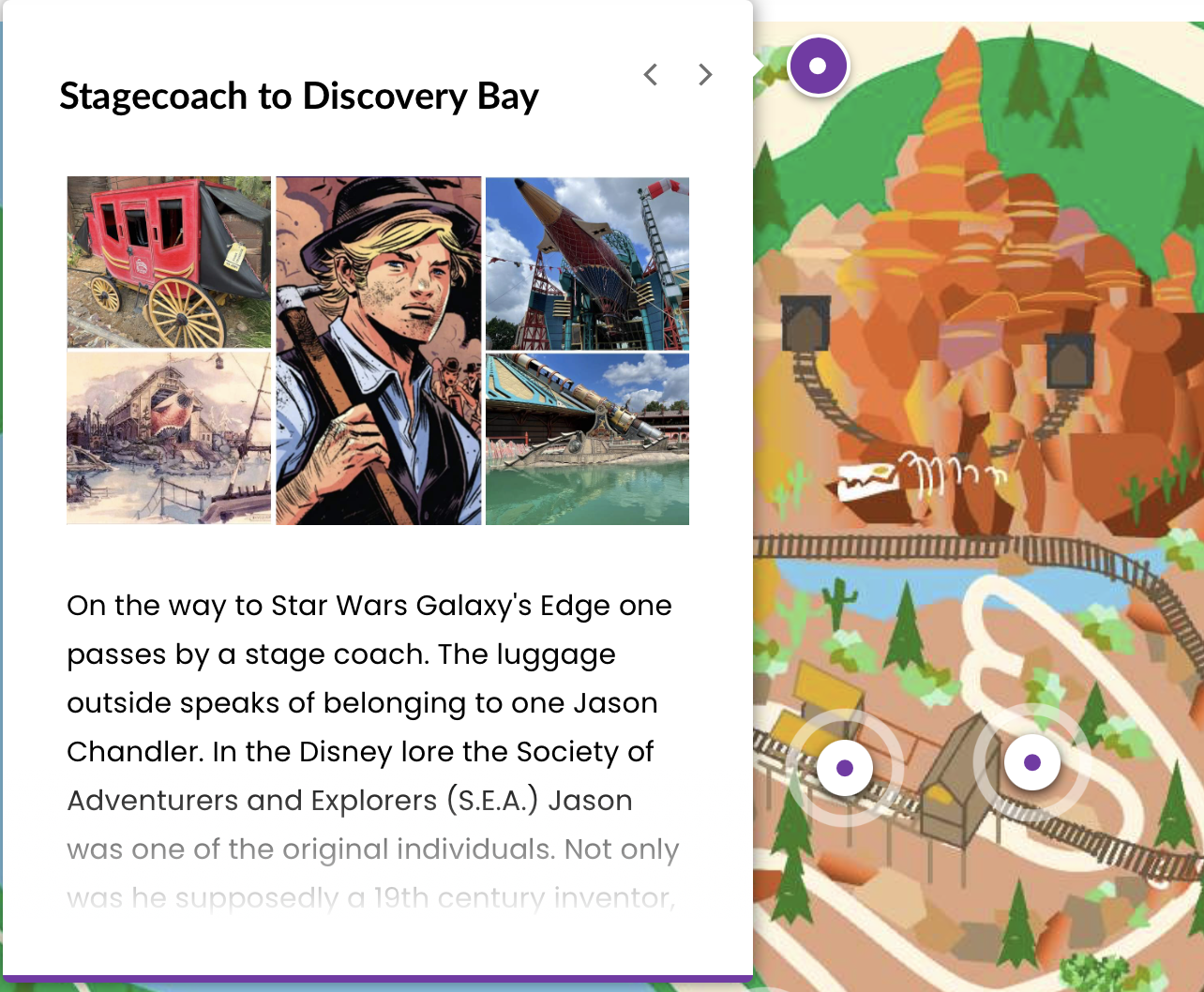
What Does It Showcase?
- Covers all 9 lands of Disneyland (from Main Street, U.S.A. and Fantasyland to Star Wars: Galaxy’s Edge and Bayou Country).
- Features over 150 clickable park locations, hundreds of pages of historical text, and more than 400 photos and graphics (including over 100 historic images).
- Includes 2+ dozen maps and charts, 24 full-length podcast/audio bites, and roughly 75 exclusive videos.
- Explores granular park details (like specific store architecture on Main Street, hidden stories in Fantasyland and Tomorrowland, and personal anecdotes).
2. Disneyland Insights: Inspiration, Ideas & Magic for You and Your Organization
What is it? Combines visual storytelling, historical case studies, and corporate insights from Kober’s background with the Disney Institute and Performance Journeys.
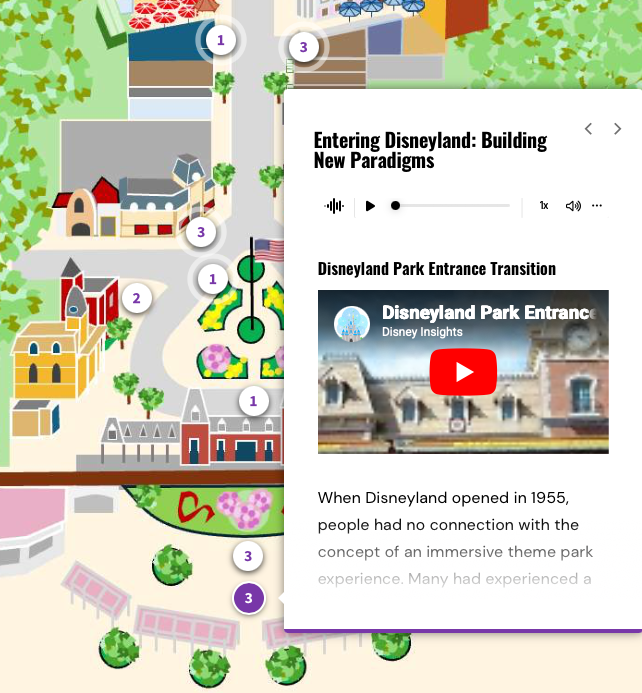
What Does It Showcase?
- Like the other interactive experience it covers all 9 lands of Disneyland where you interact with over a hundred locations to see a business- and leadership-focused interactive multimedia experience that extracts lessons from Disneyland for teams, culture, and branding.
- It translates theme park design, customer service, and operational history into actionable takeaways for business leaders and organizations.
- It reimagines how historical park benchmarks, employee engagement principles, and creative decision-making can be studied away from a linear book format.
Books From Your Host at Disney Insights
Also, if you’re looking to grab something today, go to Amazon where you will find four of my books available for purchase. Three explore Disney at length, and one explores world class businesses to include Disney. Check them out!

My newest book, A Century of Powerful Disney Insights, Volume I 1923-1973, The Walt & Roy Disney Years is available!
Also, check out my two of my other books, The Wonderful World of Customer Service at Disney and Disney, Leadership and You.
Also, for those examining other business benchmarks beyond Disney, check out Lead with Your Customer: Transform Culture and Brand Into World-Class Excellence.
Thanks for joining us for this podcast. Know that as in the title of my organization, Performance Journeys, it’s as much about the journey as it is about performance. Find the second star to the right, and keep going straight on till you reach it. Follow the compass of your heart, and know that with a smile and a song, a little faith, effort and pixie dust, your dreams can come true. After all, if we can dream it, we can do it. Until next time, bright suns, we’ll see you real soon!